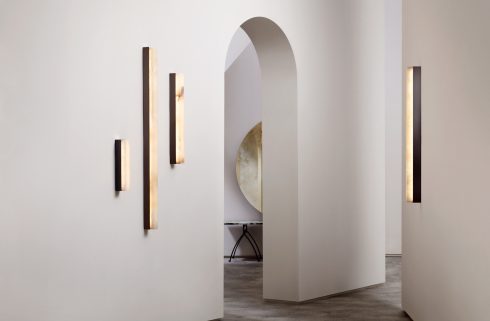
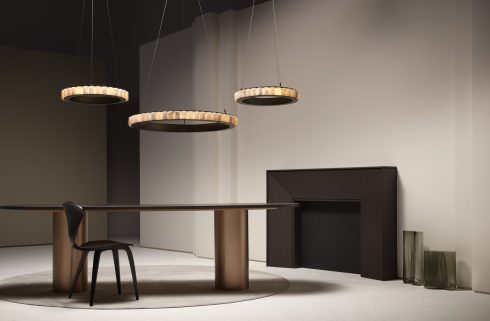
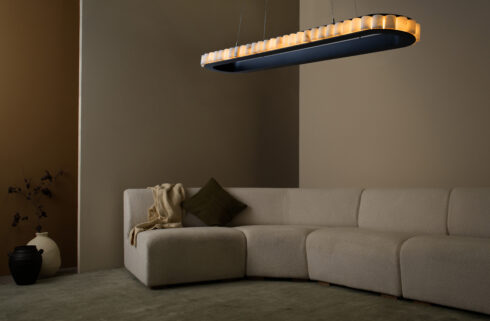
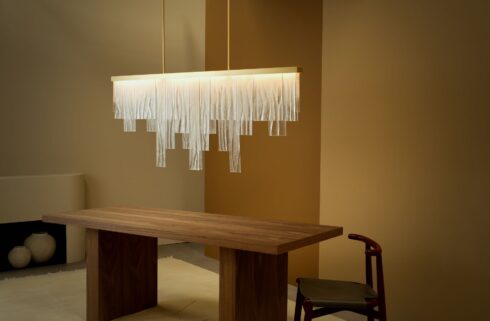
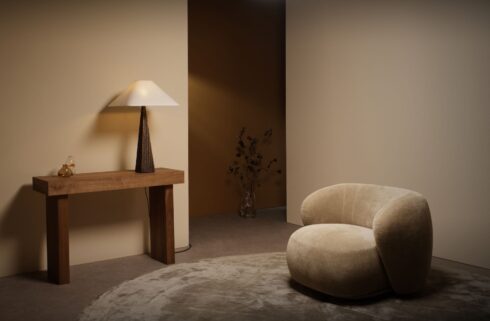
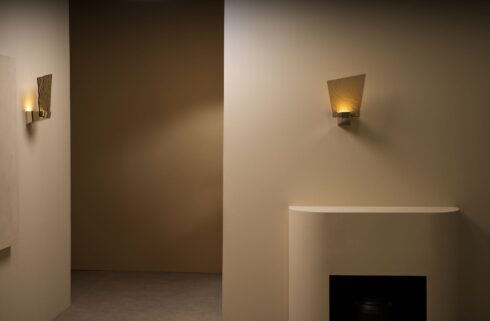
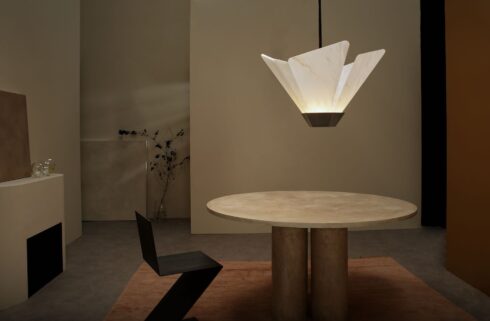
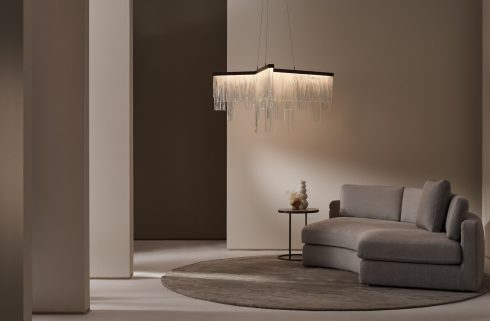
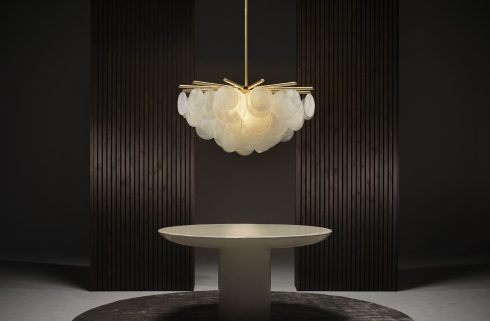
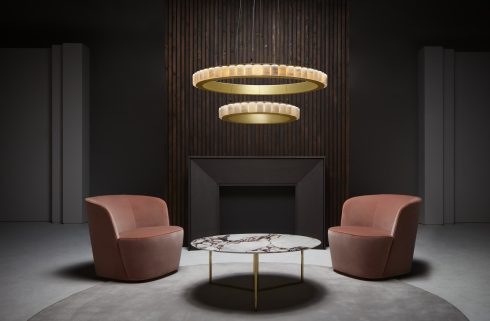
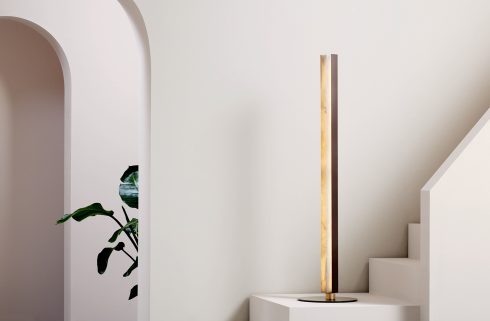
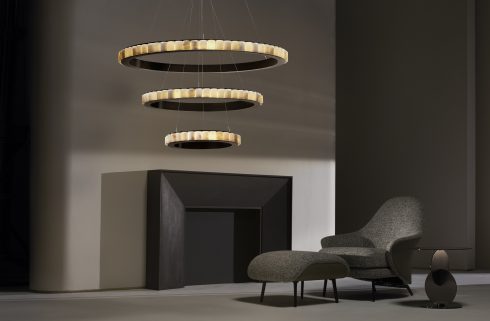
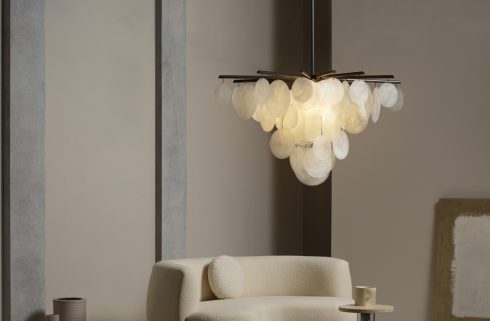
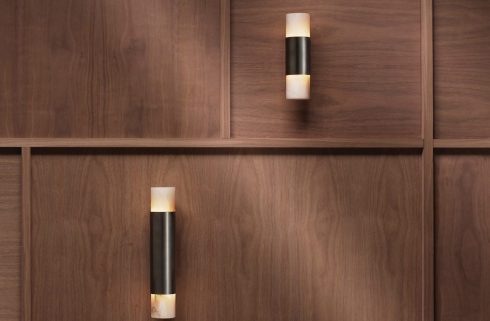
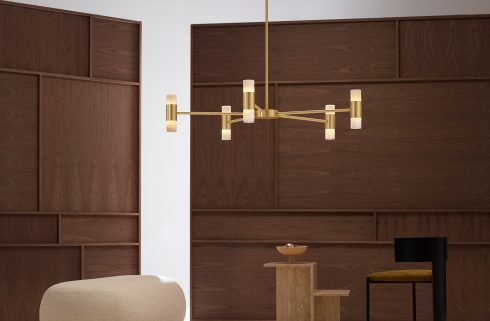
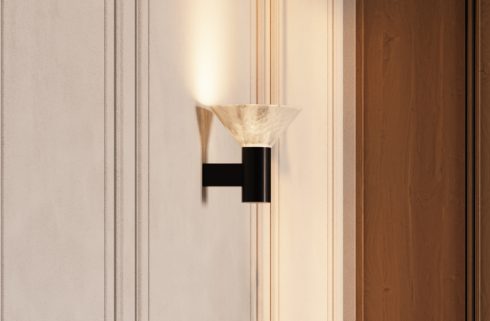
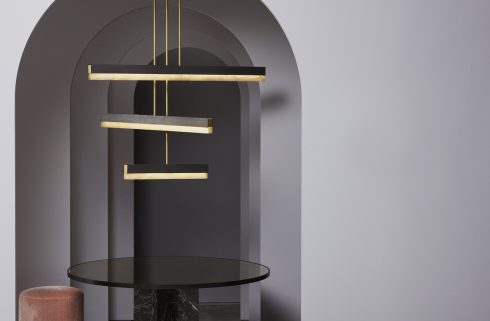
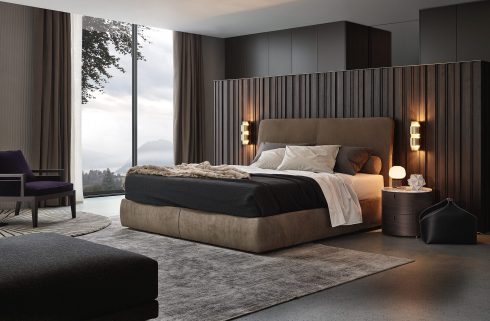
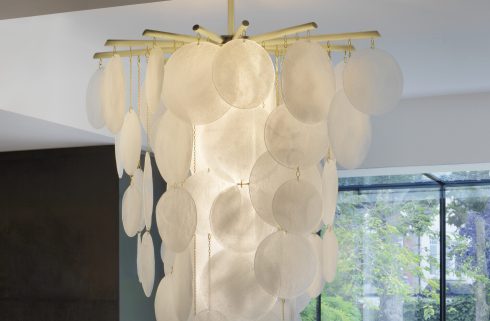
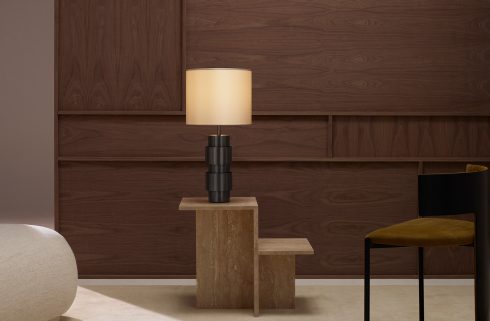
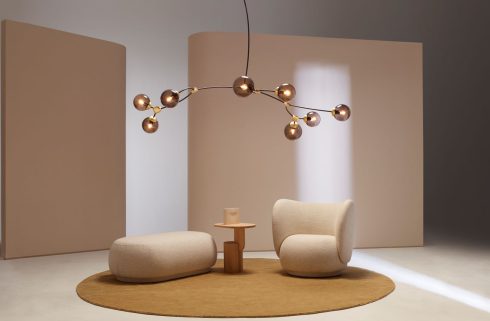
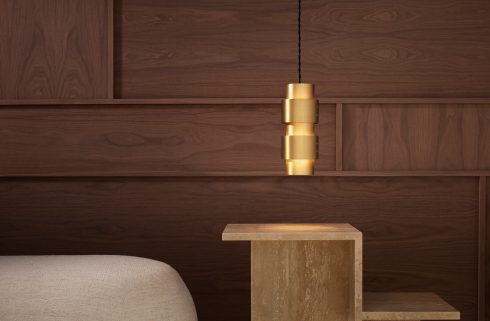
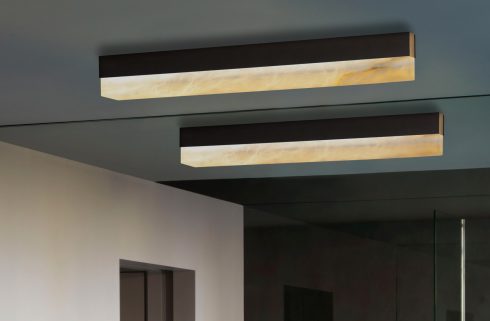
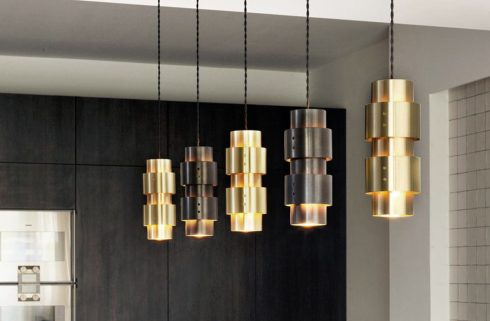
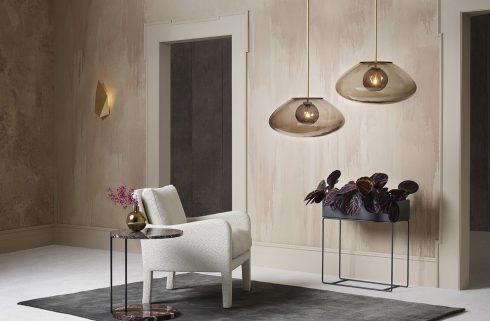
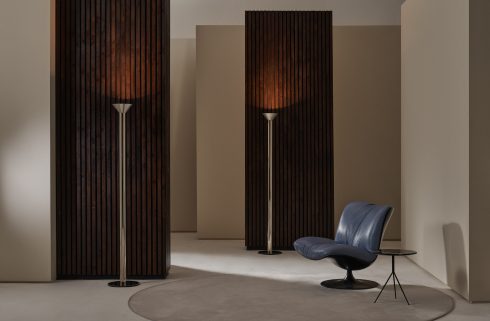
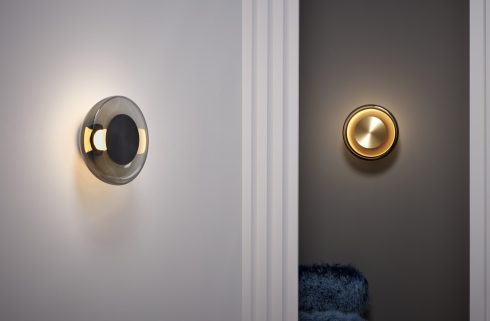
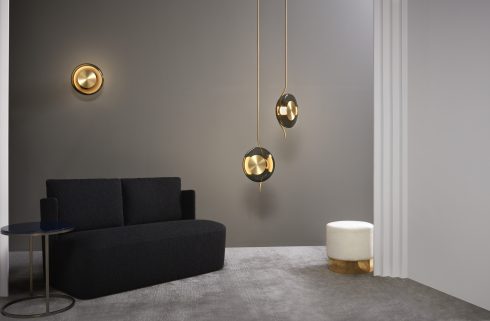
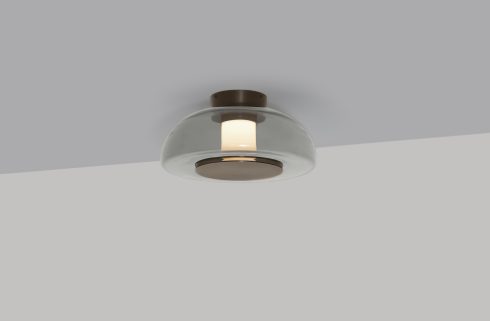
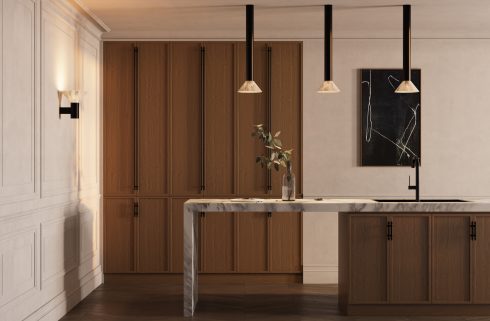
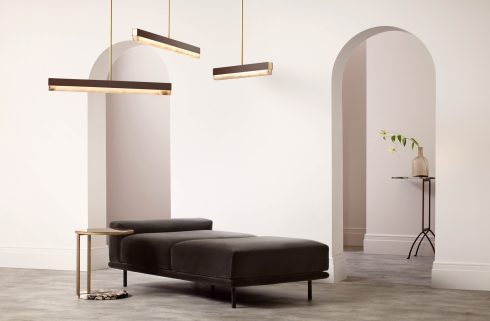
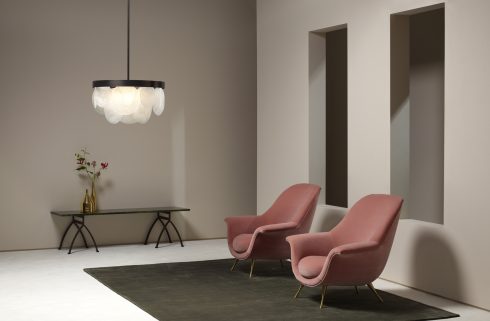
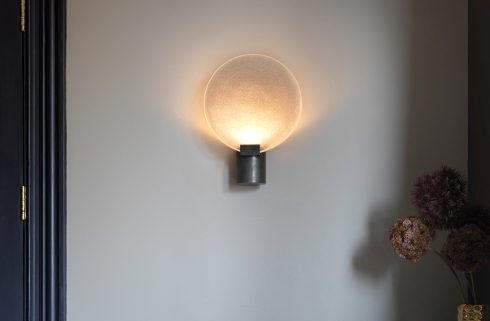
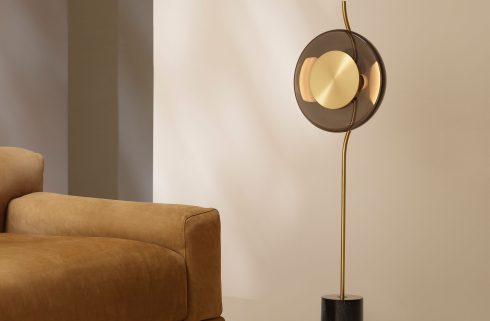
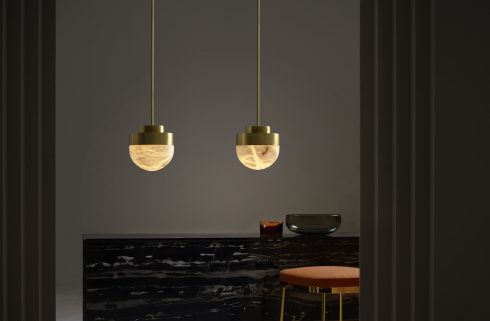
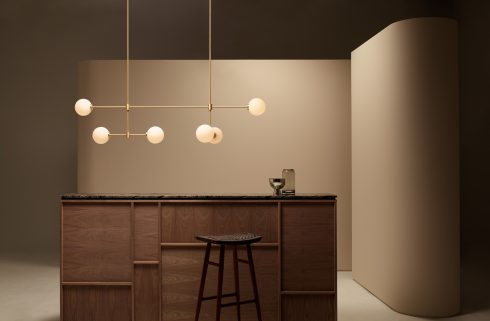
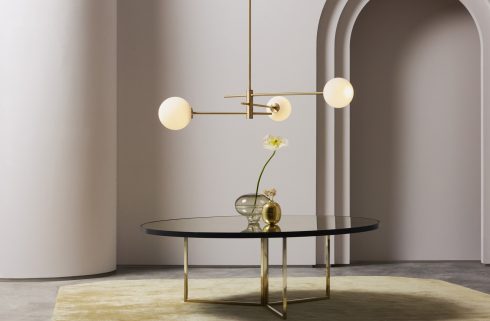
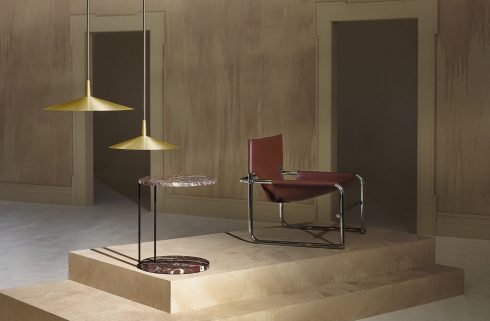
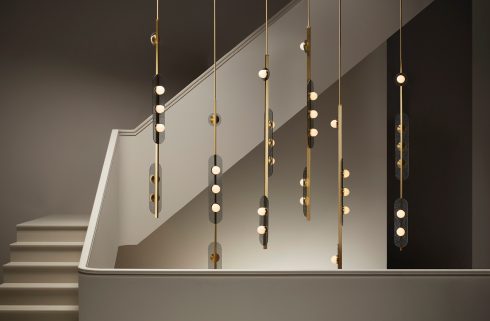
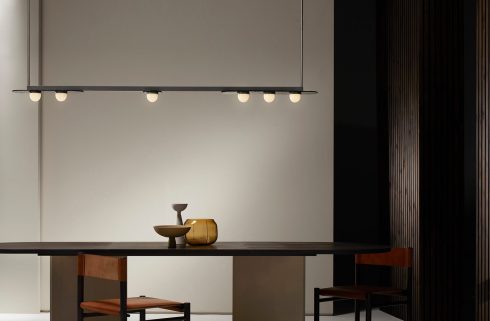
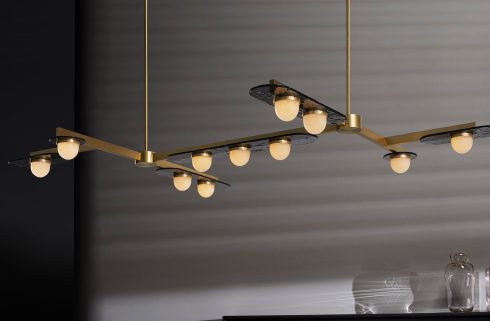
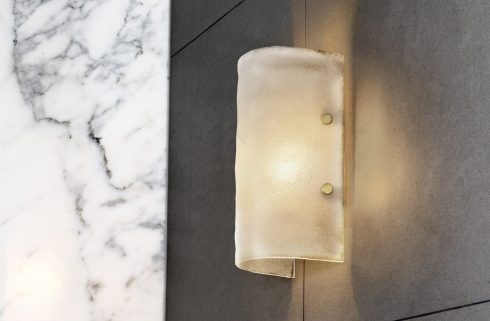
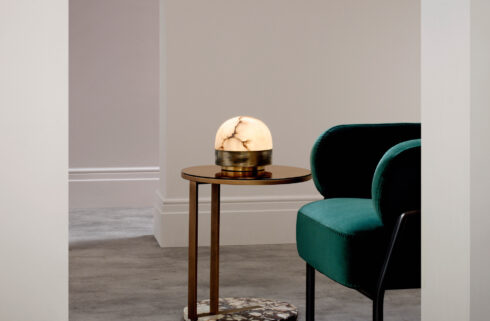
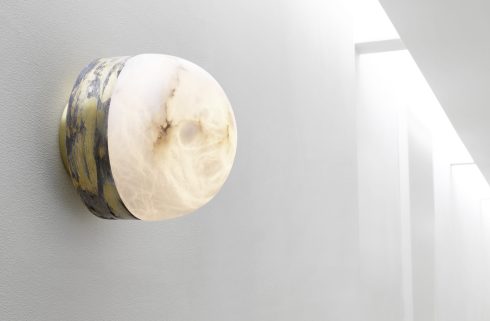
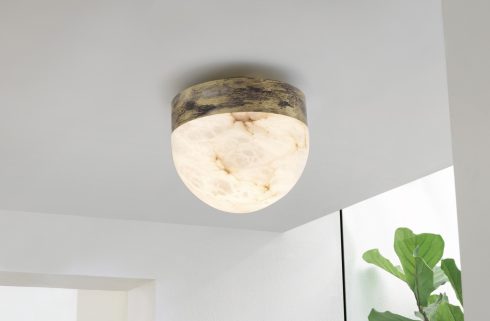
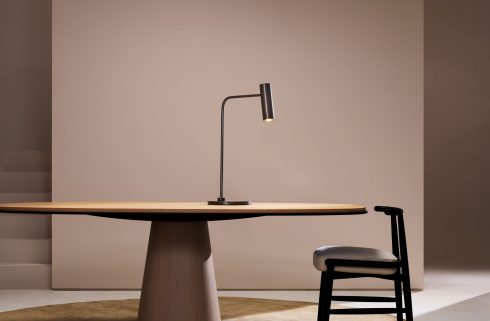
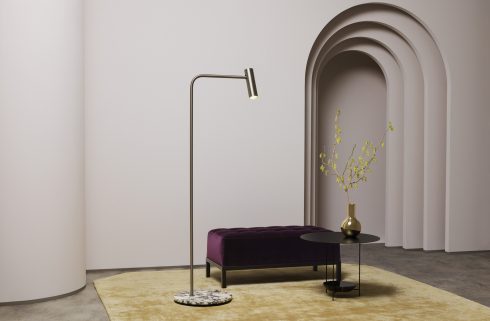
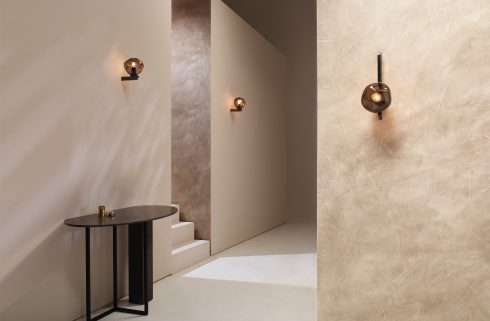
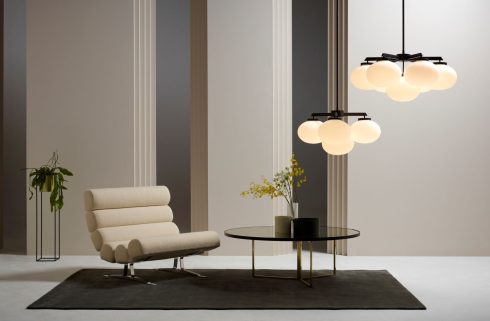
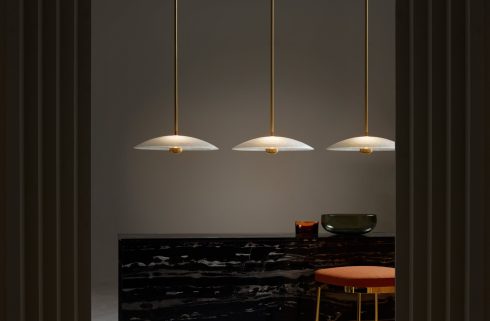
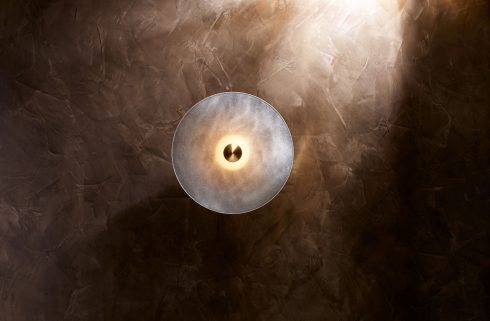
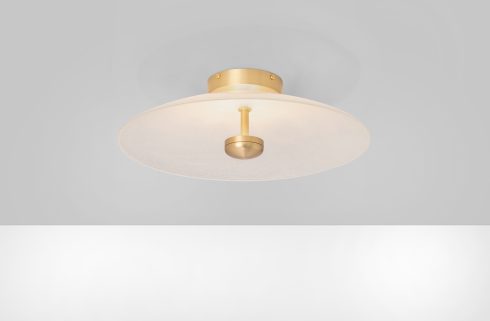
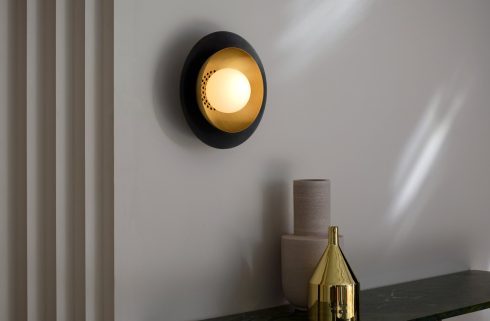
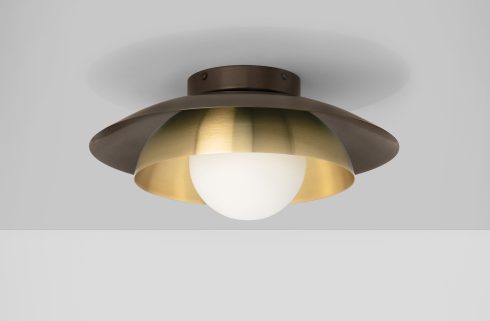
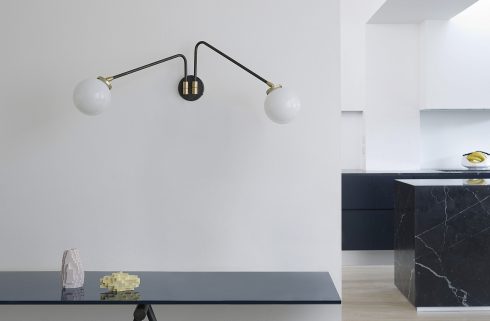
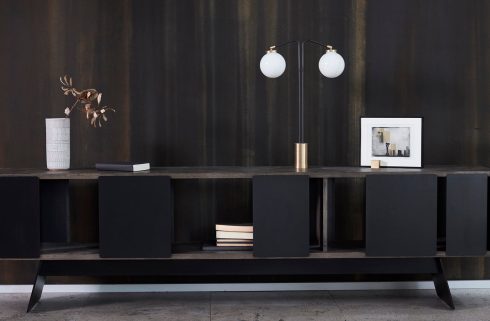
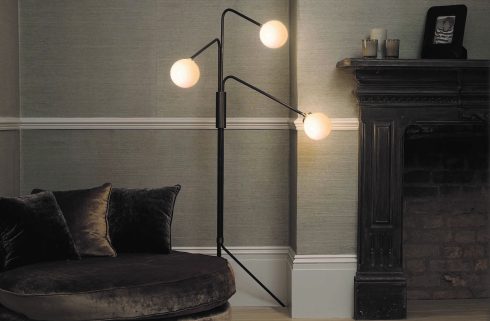
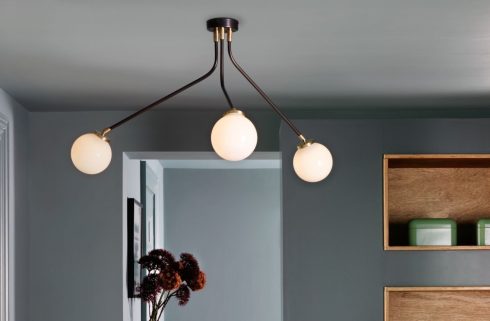
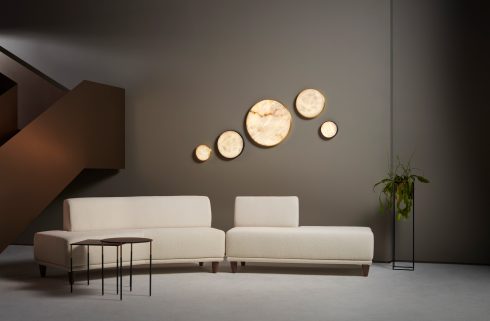
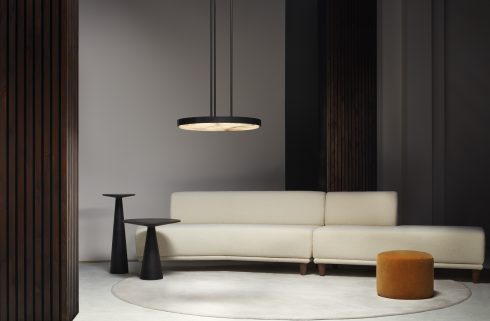
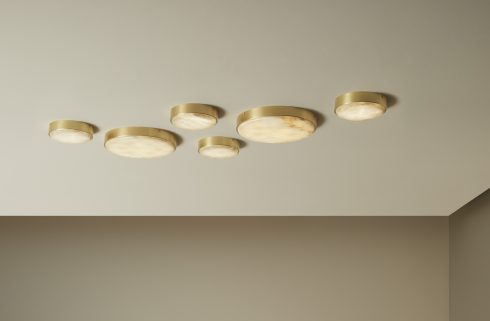
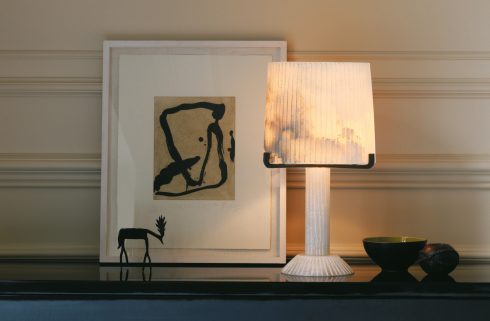
At CTO Lighting, every design starts with material. Brass, alabaster, glass, stone. Each chosen not just for appearance, but for how it interacts with light.
In this material study we take this philosophy beyond lighting. Artist Matt Turner reimagines CTO’s signature materials through three sculptural works: a cast bronze candle holder, a table built from individual alabaster blocks, and a CNC-milled alabaster sculpture carved with the topography of its own quarry. Together, they explore origin, process, and the transformation of raw matter into refined form.

From Material to Meaning
When CTO approached Matt Turner, the brief was simple: celebrate the brand’s materials in a new way. Move beyond function and explore what else they could express.
“We wanted to create art at the core of CTO’s principles,” Turner says. “To step away from the commercial value of the materials and create something unexacting, something that simply celebrates their presence and beauty.

Alabaster Cube Table
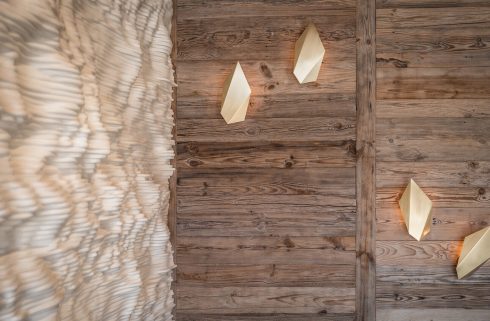
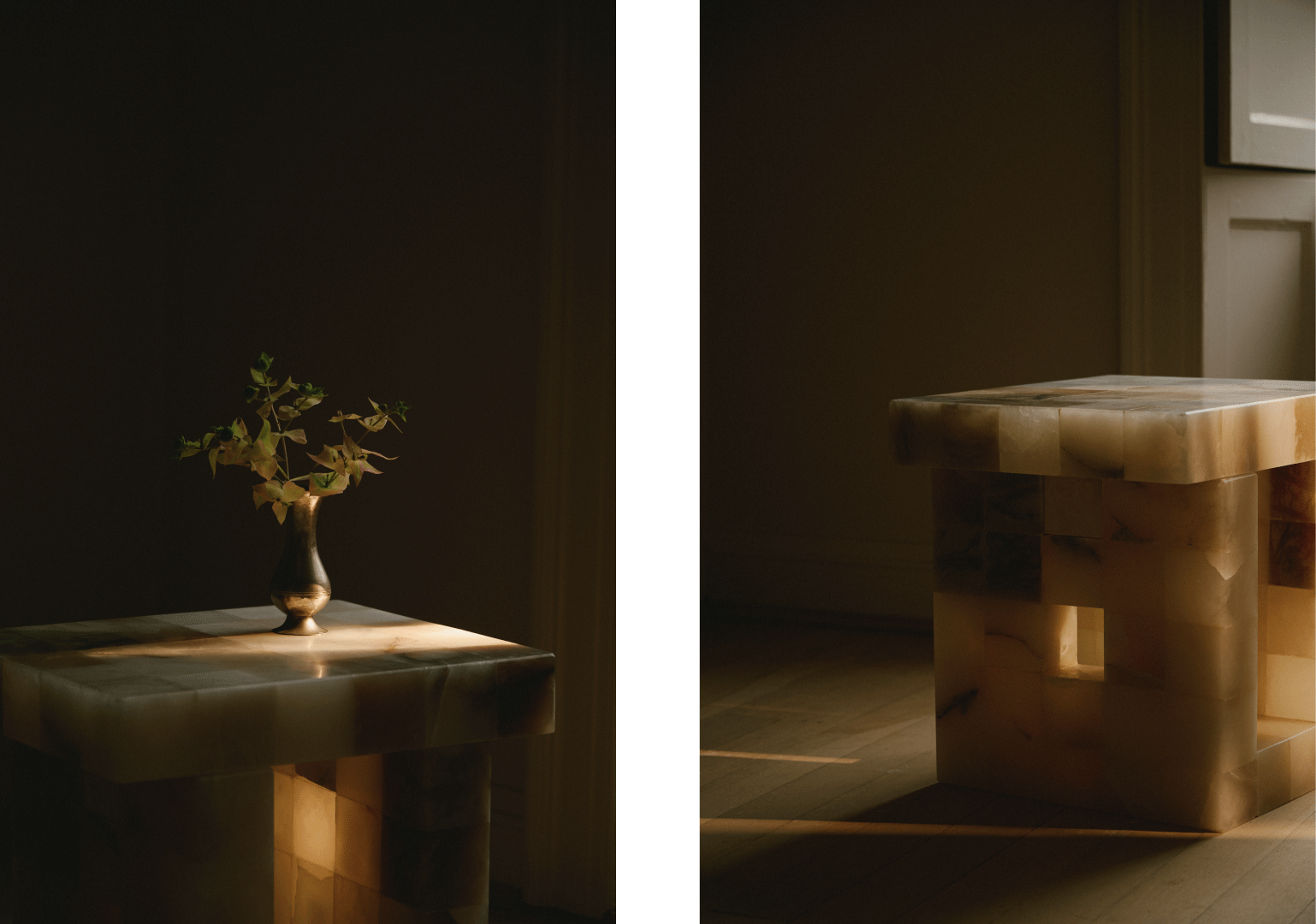
The first piece is a table constructed entirely from individual cubes of alabaster, each one distinct from the next. No two cubes share the same pattern. Some reveal dense, creamy veining that runs like rivers through the stone. Others are nearly translucent, their veins sparse and delicate. When arranged together, the cubes create a mosaic of geological time, each block representing a different moment in the stone’s formation.
This piece celebrates alabaster’s essential quality: its variability. While many materials are prized for their consistency, alabaster’s beauty lies in its unpredictability. Each cube is a window into the earth’s slow, ancient processes. When light passes through the assembled table, it illuminates these differences, turning the functional object into a study of material variation and natural beauty.

Cast Bronze Candle Holder
For this piece, Matt collaborated with The Ouze, a jewellery studio known for refined metalwork.
Conceived as a large-scale piece of jewellery, the work required the same intricate techniques used in fine jewellery, scaled up to sculptural proportions.
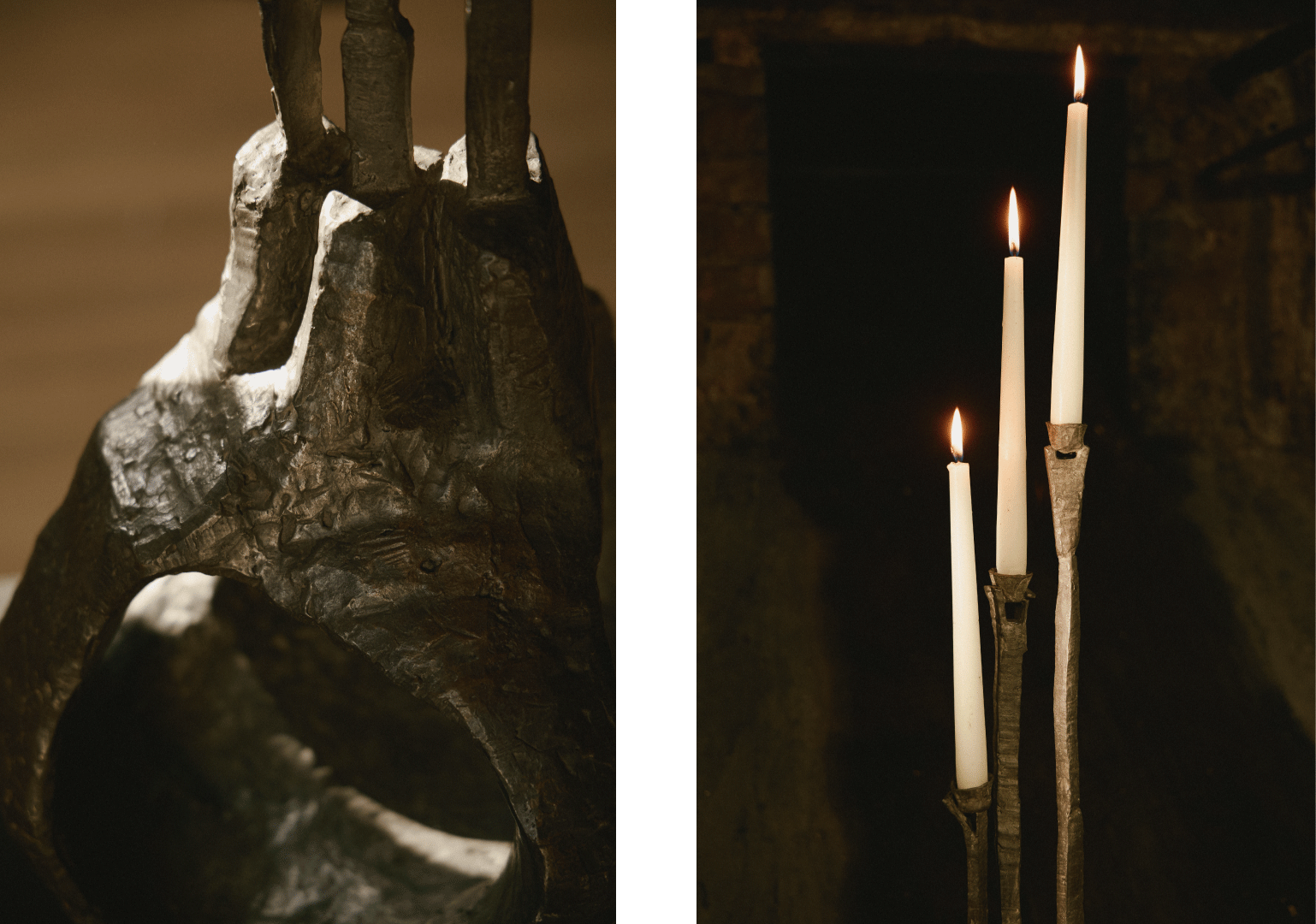
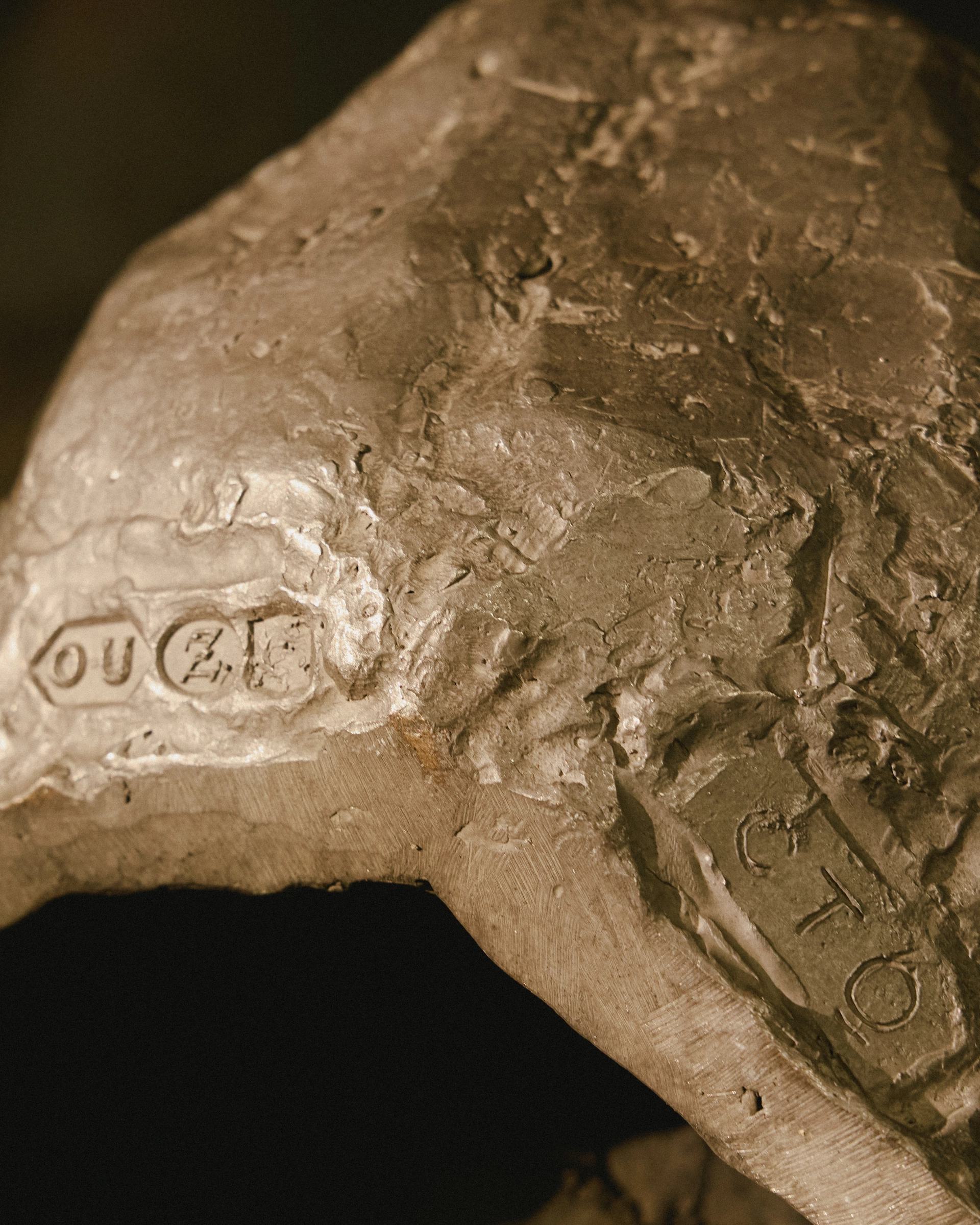
The process began in The Ouze workshop, where Turner worked alongside Toby and Joe to build the original form. They spent days bending, cutting, and layering wax by hand, gradually building up the complex structure. Each element was carefully considered, each curve and fold deliberately placed. The handbuilt wax form was then cast in bronze, capturing every detail of their collaborative work.
The finished piece carries the marks of its making. The brass surface reveals the texture of hands at work, the subtle irregularities that come from shaping material directly. It’s jewellery in spirit and technique, sculpture in presence and scale. The candle holder bridges these worlds, demonstrating how craft traditions can transcend their typical boundaries.
Topographic Alabaster Sculpture
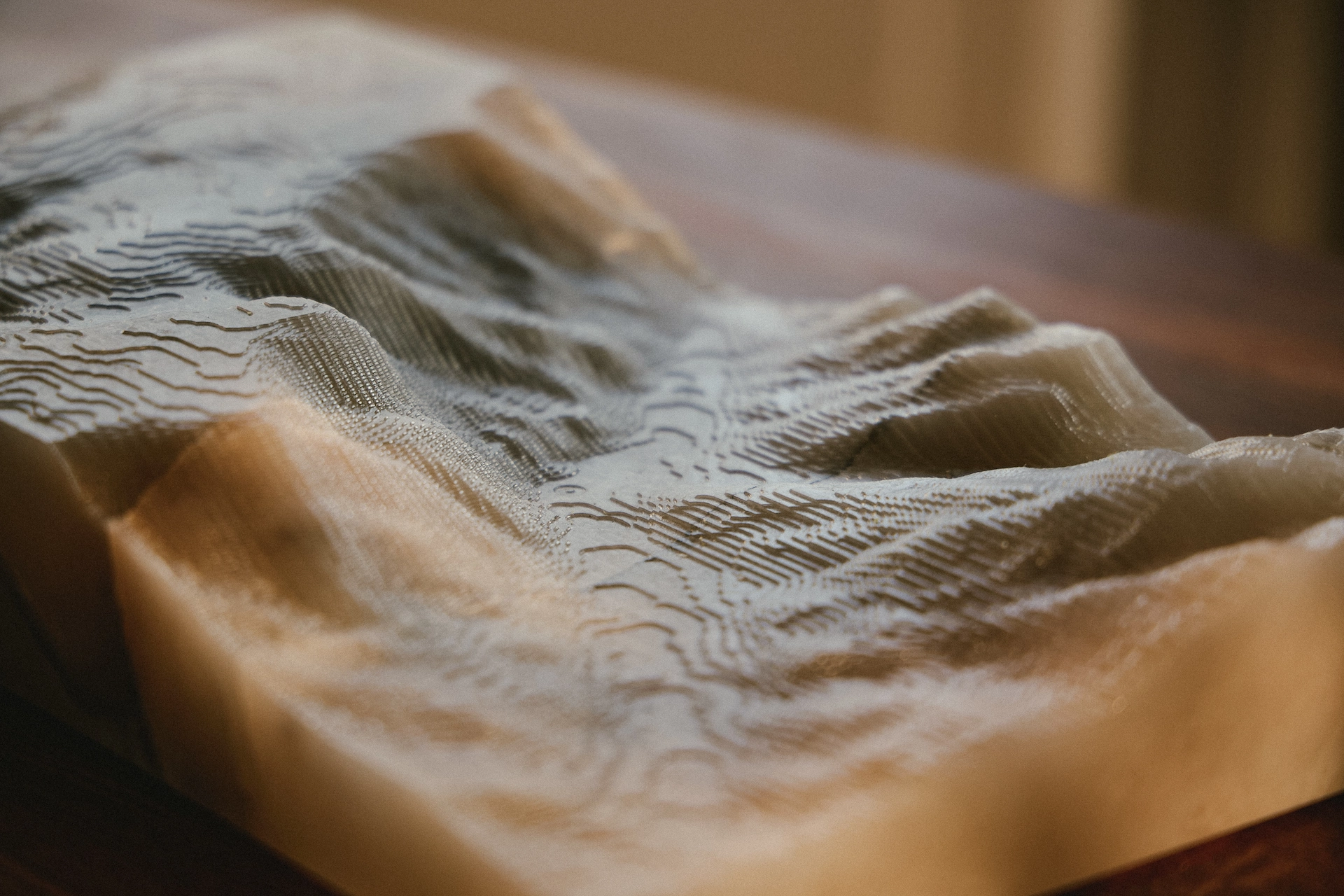
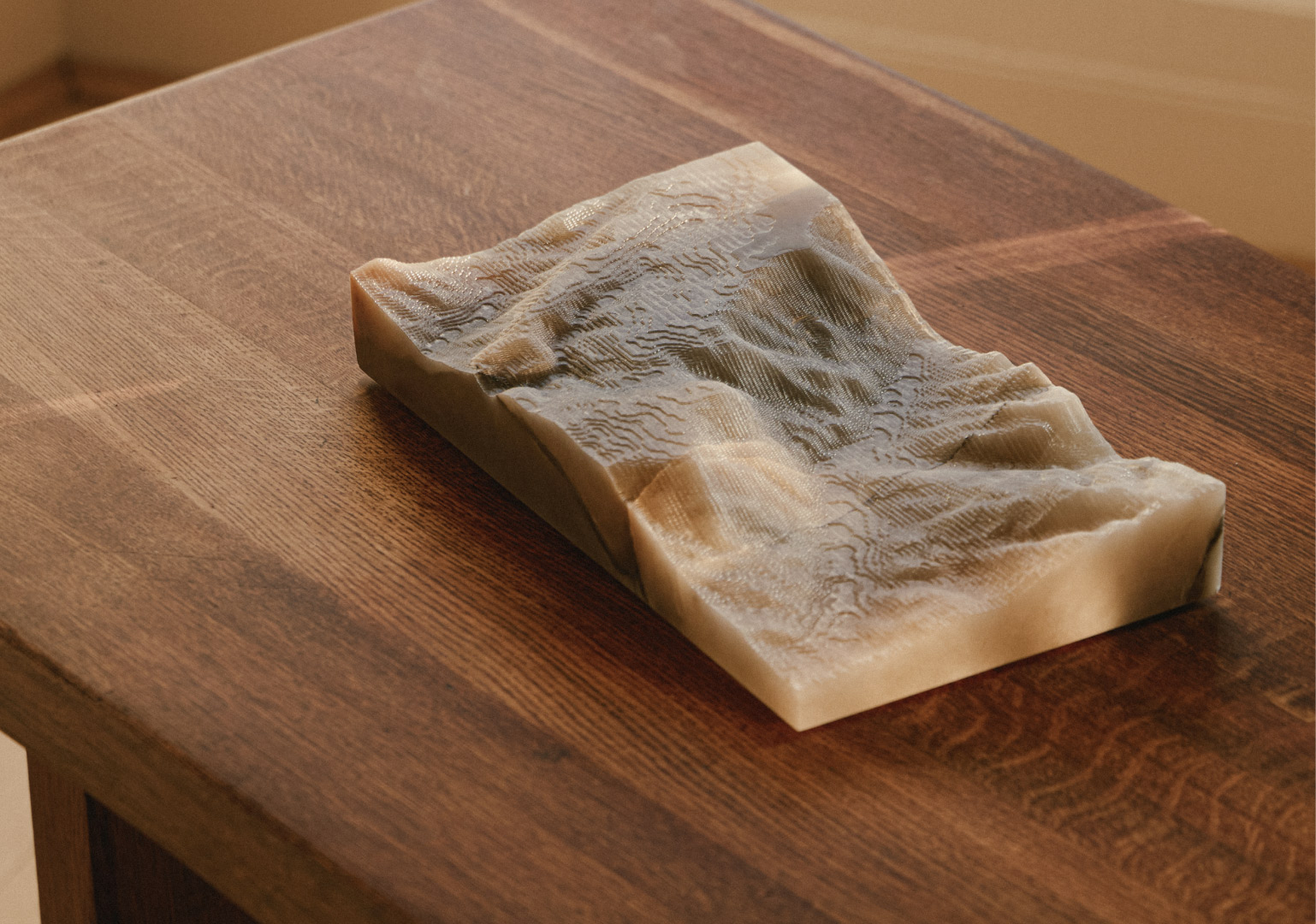
The final piece is perhaps the most conceptually striking: a block of alabaster carved with the topographic contours of its own origin. Turner sourced aerial data of the alabaster quarry in Aragon, Spain, the very site where this stone was extracted. Using CNC milling technology, he translated that digital information into physical form, carving the landscape directly onto the material that came from it.
The result is a piece that exists in dialogue with itself. The alabaster depicts the negative space it once occupied, the void left behind by its removal. Ridges and valleys map the quarry’s terrain in precise detail, creating a three-dimensional record of place. As light moves across the carved surface, shadows collect in the milled valleys, emphasizing the topography and bringing the distant Spanish landscape into relief.
This piece asks questions about material memory and origin. It suggests that every object carries an invisible connection to its source, and by making that connection visible, Turner creates something between sculpture, map, and memorial. The collaboration with the quarry’s own craftsmen to achieve the right technique and finish adds another layer of meaning. The people who work this land every day helped create a portrait of it.

Q&A with Matt Turner
When CTO approached you, what ideas came to mind?
I wanted to explore the materials CTO commonly uses and experiment with techniques not typically applied in lighting design. Since we were creating one-off pieces, I could focus on the object itself rather than function. It felt like an opportunity to present their materials in a more artistic, expressive way while staying true to the brand’s aesthetic.
How did the collaboration with The Ouze come about?
I’d been following their work for a while. I love their metalwork. It has this beautiful intricacy and sensitivity. When I started gathering references for one of my designs, I kept coming back to their jewellery. Eventually, I just reached out. We started chatting, and it naturally evolved from there.
What did The Ouze bring to the project?
Incredible depth of knowledge, from metalwork and finishes to carving and craftsmanship. Having two more creative minds made the process more dynamic. Toby and Joe work with metal every day, and that hands-on, detail-oriented approach was exactly what I wanted. The piece needed to be finished to the same standard as their fine jewellery.
How did your approaches complement each other?
With my knowledge in casting glass and their expertise in casting metal, we had a strong understanding of how to approach the piece. Our goal was to create a large, sculptural piece of jewellery using the same intricate finishes they apply to smaller work, just at a bigger scale. We spent a few days in their workshop bending, cutting, and building the wax form by hand.
Can you describe your creative process?
I spent a long time creating concept boards filled with sketches and references. After several weeks, I refined my ideas from around nine down to four key concepts. Then I started exploring who I wanted to produce them with. I wanted to work with makers who were genuinely invested in the processes. For each design, I created technical drawings and ordered material samples. Through close conversations, we refined the designs to make sure the vision was fully realized.
How does light influence the way you design?
Light plays a crucial role in revealing textures and finishes. This is especially true with alabaster, which allows light to pass through it, illuminating the stone from within and exposing its natural veins. Light can make or break a piece. In my own practice, I often work with technical lighting, so I understand how essential it is. Since materiality was at the heart of these designs, it was important that the raw makeup of each material was clearly visible and celebrated through light.
The pieces balance craft and technology. How do you approach that relationship?
I fully embrace it. From the first sketch to using digital tools to refine an idea, I’m drawn to the dialogue between designer and technology. That back-and-forth is where thoughtful, meaningful work emerges. While I value technology when it serves the work, I believe craftsmanship remains essential. It’s the human touch that gives each piece its authenticity and soul.
The alabaster sculpture maps the topography of its own quarry. What inspired that?
I wanted the material to tell its own story. The idea started with a simple thought: what if the alabaster itself became an architectural model of its own quarry? The material would depict the place of its origin.
There’s a quiet poetry in that. The alabaster, carved into a representation of the quarry, is both a model of and from that very site. I’ve always been interested in naturally formed materials and how they capture a moment in time, a physical record of their geological history.
Using digital tools, I collected aerial data of the quarry and surrounding area. The making process involved close collaboration with the quarry’s craftsmen. It felt fitting to have them heavily involved, since the piece is ultimately about their material and the land they work with every day.
What were you hoping to reveal about CTO’s materials?
I wanted to highlight their beauty. Materiality has always been at the heart of CTO’s designs. Just as each of my pieces carries its own story, so do their lights. Every material and every craftsman contributes their own narrative.
What emotions do you hope these works evoke?
I’ve always tried to create a sense of wonder in my work. I’m fascinated by how people respond to materials. Their curiosity, their need to look closer or feel a texture. I hope each piece sparks a thought or memory, something that connects to their own experiences. When someone wants to touch a piece, that’s usually the best sign it’s made an impact.
Where do you look for inspiration outside of material and form?
I often look to nature, especially rocky or rugged landscapes. I’m fascinated by lunar terrain. Its greyscale tones, its stillness, its sense of isolation. I’m particularly captivated by places like Iceland, where the landscape feels almost otherworldly. In some of my projects, I’ve even used NASA renders. I’m intrigued by the idea of taking inspiration from places and materials that exist beyond our reach.
Q&A with The Ouze
What drew you to the idea of translating jewellery-scale craft into larger sculptural forms?
Playing with scale has always been a key part of our vision, as the process inherently has no limit, allowing us to cast objects from tiny to enormous. Matt’s timing was perfect for this exploration. We were excited to apply our highly familiar processes and materials in this new, larger-scale way. The techniques developed through our jewellery creation are easily translatable and provide a strong foundation for bigger projects. Seeing how far we could push the scale has always been a dream, and this presented the ideal opportunity.
How did you and Matt find a shared language between your disciplines?
We developed the design through an iterative process of trial and error, involving numerous initial meetings for sketching and research, followed by the sculpting phase. Collaboration was essential, enabling us to experiment with new techniques and share expertise. Matt’s specific background in sculpture, drawing from previous work with cast glass and other materials, was vital in determining the final shape and form for this project. This knowledge complemented our expertise in lost wax casting perfectly.
How does scale change the way you think about craftsmanship and proportion?
Finding an effective technique for wax carving at this scale was a challenge. After much trial and error, we succeeded, and the process became surprisingly similar, we used the exact time tools and materials as we do in our jewellery. While the proportions were naturally different, the core objective remained the same: achieving balance and appropriate weighting.
A key consideration for larger, more sculptural pieces, unlike jewellery, is picturing their place in the world. Since they occupy more space, careful attention to proportions is essential.
The finished pieces feel both refined and raw. Was that balance intentional?
When we choose to leave the work in this raw and somewhat unfinished state, it is a deliberate and intentional aesthetic choice. For us, this approach serves to reveal the authentic evidence of human hands and effort in the creation process. We purposefully avoid over-polishing or erasing these natural traces of work, instead choosing to celebrate the inherent character and beauty found within imperfections.
How do collaborations like this influence your own creative practice?
Collaborations are a vital component of our strategy, not only affirming our position as a respected partner for other brands but also enabling us to venture into new creative territories and advance our world-building efforts. They are essential for experimentation, allowing us to pursue projects that would otherwise be beyond our scope.
The Poetry of Process
Each work within Objects of Origin tells a story of transformation. From earth to object, from raw substance to refined form. For Turner, the project became a study in patience, process, and collaboration. For CTO, it continues a dialogue that runs through every collection: the pursuit of beauty through material honesty.
The works now stand alongside CTO’s lighting collection, sculptural reflections of the same values that define the brand: craftsmanship, materiality, and timeless design.